Tag Archives: Boxing Deaths

Can Boxing Be Made Less Dangerous? Mike Silver Believes So And Proposes A Formula

Review:

When In Doubt,

Stop The Bout

A Revolutionary Approach To

Boxing Safety And Reform

By Mike Silver 

Hamilcar Publications

Reviewed By Bobby Franklin, December 2, 2025

It has often been said that unlike other sports, you don’t play boxing. True. Boxing is a unique competition in many ways, but there is one primary aspect of it that makes it truly different from other athletic endeavors; the requirement that in order to be successful, a boxer most become proficient  at inflicting physical damage, even brain injuries, on his opponent. This some times leads to death, and more often, too often, to CTE (Chronic Traumatic Encephalopathy).

While it is true that participants in other sports, most notably football, also risk severe brain damage from concussive trauma, boxing is the only sport where success is measured by how well a person is able to become in causing physical harm to the person with whom he is competing. There is no getting away from this.

Can boxing be made safe? Not unless it is banned. Can boxing be made less dangerous? That is the question boxing historian Mike Silver tackles in his deep dive into reforming this hazardous sport in When In Doubt, Stop The Bout A Revolutionary Approach To Boxing Safety And Reform.

Mike has done extensive research into the subject of boxing safety. He has  accumulated statistics dealing with the number of boxer deaths over the years as well as what effect the length of a fight has on increasing the risk of one or both of the participants being seriously injured. 

Mike Silver

Early in the book Mike comments on how the lack of regulation plays a role in putting the fighters at risk. He rightly observes that to become a boxing trainer in most locales around the world, all you have to do is walk into a gym, throw a towel over your shoulder and say you are a boxing coach. This is criminal. Young kids with an interest in boxing are put into a situation where when they first walk into a gym they are trusting someone who can get them killed. Where’s the oversight? There is none.

Mike spends time later in the book exposing the corruption higher up the ladder in the boxing world. From the alphabet soup organizations to promoters such as Don King. In 1997 King was inducted into the International Hall Of Fame, an action that speaks to just how low the standards are in boxing.

Reading about the sordidness and corruption in the sport may leave the reader with a terrible stench in his nostrils, but that is just one section of the book. Mike saves his best when offering up ways to mitigate the dangers faced by pugilists. They all have merit even though a few sound counterintuitive.

Take the case of the boxing glove. It has become dogma in the minds of most people that the padded covering for the hands prevents head injuries. Mike makes a strong case, one which I have long believed, that the glove actually makes the sport more dangerous and the blows more lethal. Once you read his argument you will see the boxing glove in a whole new light. Mike even quotes actor James Cagney on the subject. 

His chapter contrasting  MMA fighting with boxing is also an eye opener. Here is a sport that is perceived as more brutal than boxing, but, as the author points out, actually has many more safety measures built into it, and brain injuries are far fewer. Heavily padded boxing gloves are not used by the combatants, a point that bolsters Mike’s argument about the dangers of the boxing glove.

The most controversial, and most likely the change that would do the most good comes down to the author’s proposal to limit the rounds of fights. Many of us remember when title fights were scheduled for fifteen rounds. That was done away with after the death of Duk Koo Kim in a bout versus Ray Mancini in 1982. The fight was seen live on national TV. After that tragedy, title bouts were limited to twelve rounds. 

Mike contends, today even twelve rounds is unsafe for most boxers. In years past fighters would slowly work their way up to longer duration matches by starting out in four rounders, then moving up to six, eight, and finally ten round bouts if they showed they had the ability to handle the distance. This was done over time. It was a sort of an apprenticeship approach.

Now, it is not uncommon to see fighters in their ninth or tenth fight challenging for a world title in a twelve round fight. Mike points out that no matter their physical conditioning, and these fighters are athletes, they have nowhere near the experience to handle going that distance. And the lack of experience is most notable in their lack of defensive skills. Boxing today is mostly about exchanging punches, basically fighters taking turns hitting each other in the head. It is no longer the Manly Art Of Self-Defense. 

There is much more in this treatise on making such a dangerous sport less unsafe. Mike delves into training for referees, the role of the ringside doctors, when a fight be stopped (this is quite interesting), and the case for head guards. 

This is an important book, one that should be read by members of every boxing commission, referees, physicians, and those with influence over the rules of boxing. Will that happen? It is unlikely. 

Boxing has been around a long time, and while there have been some very decent people involved with the sort, it has also been a home to many lowlifes who don’t give a damn about the welfare of the men and women who step into the squared circle. 

The fact that Mike is able to come up with so many reforms for boxing shows just what a mess the sport is and the danger it poses for healthy young athletes. 

My take away from this book, one not intended by Mike, is the conclusion that reforming boxing is a lost cause. Not because his proposals aren’t valid, they certainly are, but rather because the swamp that is boxing will look to bury his work. I do urge people to delve into this highly readable work and draw their own conclusions. In a sane sport, Mike Silver would be garnering praise for his dedication and research into finding a way to fix boxing and protect the athletes. However, boxing is far from a sane sport, and a good man who truly cares for the welfare of it’s participants will most likely be shunned. 

I hope I am wrong, and maybe if enough people read When In Doubt, Stop The Bout, it will lead to a discussion that will lead to lessening the terrible injuries inflicted upon those who step into the ring.

A Double Tragedy: Two Boxing Fatalities on the Same Fight Card

What Went Wrong—And How to Fix It
By Mike Silver 10/22/2025

(Note: Some of the material in this article is excerpted from Mike Silver’s new book, When in Doubt, Stop the Bout: A Revolutionary Approach to Boxing Safety and Reform).

Never in the entire 133-year history of modern gloved boxing, have two fighters on the same card died from brain injuries sustained in separate bouts. Yet that unprecedented milestone was reached on August 2, 2025, in Tokyo, just nine weeks after another Japanese fighter collapsed into a coma after a bout in Osaka.

Yes, boxing is a dangerous sport but what happened in Japan was not unavoidable. These tragedies were the foreseeable result of negligence, incompetence, and corruption—resulting in a form of legalized manslaughter. 

The Warning Sign: Ginjiro Shigeoka

The chain of events leading to the Tokyo double fatality began months earlier. On May 24 in Osaka, former IBF light flyweight champion Ginjiro Shigeoka (11-1) lost a punishing 12-round decision to Pedro Tadura (17-4-1). Video of the fight shows Shigeoka absorbing a sustained head beating, especially in the final three rounds. Moments after the bell, he collapsed. Surgeons removed a subdural hematoma from the right side of his brain. He remains in a coma.

That fight should never have taken place. Ten months earlier, Tadura had taken the title from Shigeoka in a savage ninth-round stoppage. Twice the referee nearly halted it before finally stepping in. Shigeoka collapsed unconscious in his corner and required surgery for a fractured orbital bone. He had suffered a severe concussion.

The Japanese boxing commission should not have allowed him back into the ring for another fight against the same opponent. Considering the crude style and limited experience of both fighters, a repeat of their first slugfest was inevitable. The rematch would almost certainly guarantee another head beating for the doomed fighter. Which is exactly what happened. The only difference between the first and second fight was this fight went the full 12 rounds. It is a medical fact that a brain rendered fragile by a previous concussion is more vulnerable to catastrophic damage from a second concussion.

Shigeoka was cleared by the boxing commission to fight, but he was “damaged goods”—an accident waiting to happen. His best chance for survival would have been for the commission to limit the scheduled distance to not more than eight rounds—a distance more suitable to his limited experience and defenseless style of fighting. 

The boxing commission’s failure to protect its fighters is not unique to Japan—it is an international problem, repeated too many times with too many fatal consequences.

pastedGraphic.png

Fight One 

On August 2, super featherweight champion Yamato Hata (17-2) defended his Oriental and Pacific Boxing Federation title against Shigetishi Kotari (8-2-1). Both men weighed 130 pounds. 

Shigetoshi Kotari (right) trading punches with Yamato Hata.

Kotari had just 11 professional bouts. In an earlier era, he would have been a six-round preliminary fighter—not a title challenger. Yet today’s alphabet soup of sanctioning bodies routinely crowns champions with 10 to 15 fights, giving promoters a belt to market and fighters a dangerous distance to endure.

Kotari fought evenly for eight rounds, but fatigue and punishment mounted. Judges’ scorecards reflected the shift—he lost nearly every round from the ninth through twelfth. The heaviest damage came in those “championship rounds.” He collapsed in the dressing room, underwent brain surgery, and died a week later.

Had the fight been capped at eight rounds, Kotari would have likely survived. 

Fight Two: A Rock ’Em, Sock ’Em Slugfest

The same card’s preliminary bout was just as deadly. Lightweights Yoji Saito (8-4-2) and Hiromasa Urakawa (10-3) fought toe-to-toe for eight brutal rounds, trading nonstop headshots like mindless robots. Defensive skills were virtually absent, including very little body punching, no footwork, and no slipping or parrying of punches. The strategy (or lack thereof) was basically “you hit me, now it’s my turn to hit you”. 

Both men took an inordinate amount of punishment, absorbing hundreds of blows to the head. But no doctor entered the ring between rounds to examine the fighters. 

In the closing seconds, Urakawa was knocked out and became unconscious. Despite emergency brain surgery, the 28-year-old never regained consciousness. Once again, too many scheduled rounds killed a fighter. Had it been a four, or five-rounder, Urakawa would almost certainly be alive.

Systemic Failures

These tragedies are not isolated—they stem from the following systemic failures:

1. Too Many Rounds for Too Little Experience

Statistics compiled from the Manuel Velazquez Boxing Fatality Collection show bouts longer than five rounds increase fatality risk by 70 percent. The fifth round should be considered an important demarcation. Also, a third of all deaths since 2000 occurred in the final scheduled round. Yet inexperienced fighters are constantly thrust into 10- and 12-round “title” fights for the sake of marketing and to provide the nefarious “sanctioning organizations” with thousands of dollars in fees taken from the fighter’s earnings for the “privilege” of fighting for the organization’s title belt. 

2. Collapse of Standards and Skills

From the 1920s through the 1970s, fighters averaged 50–70 pro bouts before a title shot. Today’s champions often have fewer than 20. The problem is compounded by a lack of qualified trainers capable of teaching the finer points of boxing technique. With most of today’s pro fighters averaging only two to four fights a year, most never get the opportunity to develop and craft an effective defense on their own. Instead, fight after fight (and presumably when sparring in the gym) they engage in artless brawls devoid of strategy or adjustment. Every round looks exactly like the one that preceded it.

3. The Dehydration Madness

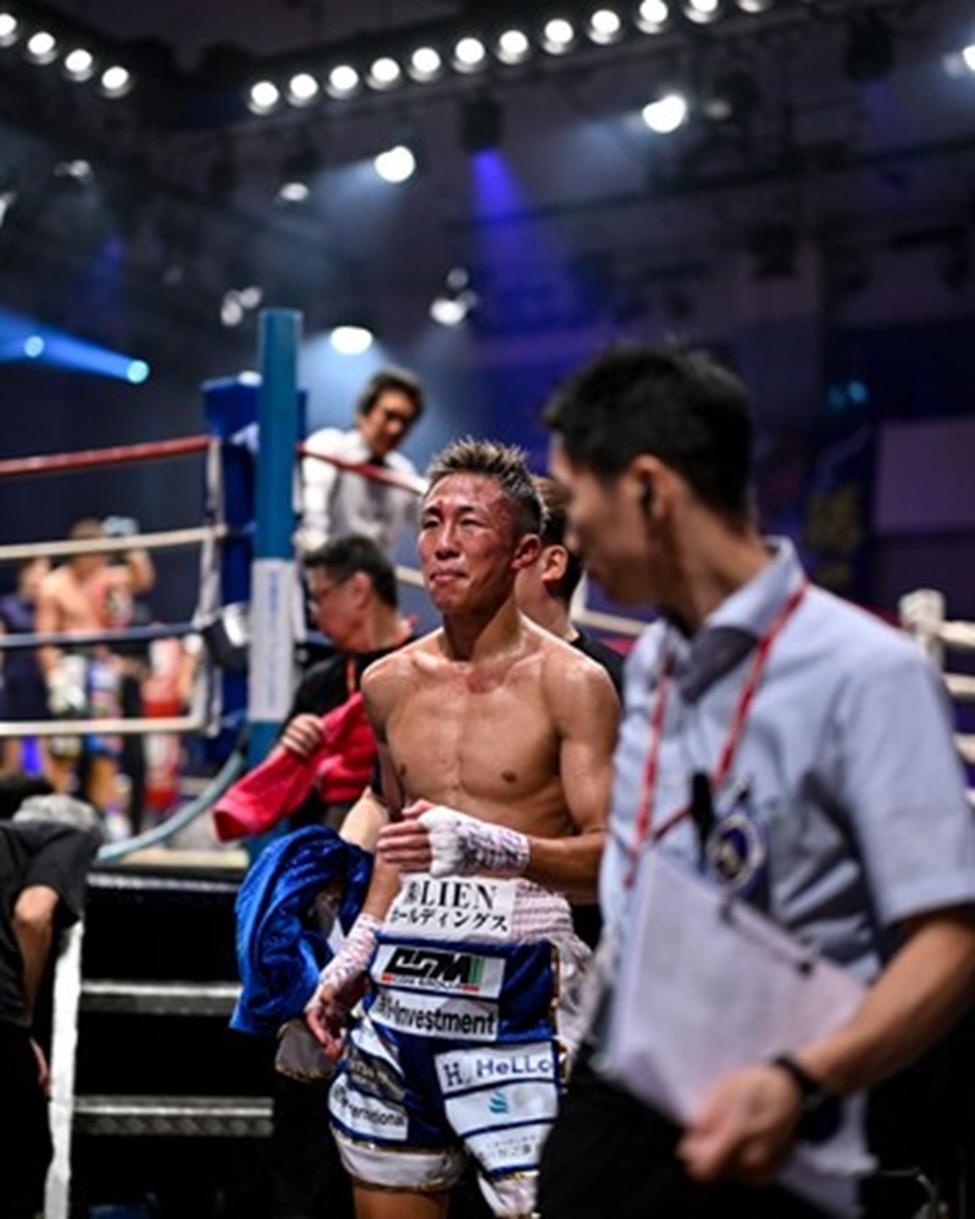
His swollen and battered face a testament to the beating he received, ill fated Shigetoshi Kotari leaves the ring after losing a 12 round decision. He collapsed in the dressing room shortly after this photo was taken.

Since weigh-ins moved to 24–36 hours before fights, too many boxers starve and dehydrate themselves to make weight, then binge to rehydrate. But the brain can’t rehydrate in a day. Dehydration reduces cerebrospinal fluid, the brain’s cushion against trauma, increasing the risk of catastrophic injury. In addition, a dehydrated fighter cannot perform with the same quickness and precision and will tire in the later rounds, making it more difficult to avoid punches. It is not clear whether weight cutting was a factor in the bouts mentioned in this article.

Legendary referee Mills Lane once made this observation: “Have you ever heard of a heavyweight dying of a subdural hematoma? I haven’t. It’s always the little guys—the featherweights and lightweights—because their handlers dry them out, starve them, then pump them full of water and food. What they’re really doing is setting that fighter up for injury.”

Statistics back up Mill’s observation. A study published in the January 2022 issue of Combat Sports Medicine, published by the Association of Ringside Physicians, found that sixty-two (75 percent) of eighty-three fighters fatally injured between 2000 and 2019 weighed between 108 and 135 pounds. According to BoxRec.com, 43 percent of all known professional bouts at that time involved fighters in the lightweight class (135 pounds) or lower. 

The study offered no explanation for the disproportionally higher number of deaths in the lighter weight divisions, but it is possible that fighters weighing between 108 and 135 pounds average more punches per round than their heavier counterparts, resulting in more sustained and repetitive head punishment. The punches of lighter-weight fighters may not look as heavy or powerful as a middleweight’s or heavyweight’s, but they may be doing more damage because of their number. 

It is also important to consider the fact that boxers in lighter weight classes (108 to 135 pounds) generally cut a higher percentage of their total body weight than those in heavier divisions, such as middleweight and light heavyweight. While fighters across all weight classes may aim to cut a similar number of total pounds, that amount represents a larger percentage of body mass for smaller fighters.

Reform Is Possible—If There’s Will

To reduce deaths and brain trauma, boxing must adopt the following reforms now:

  • Eliminate 12-round fights. Restrict most matches to 4–6 rounds. Reserve 8–10 only for elite, well-matched fighters.
  • Restore same-day weigh-ins. Fighters must weigh in within 10 hours of fighting to end the dehydration cycle and be encouraged to fight at their natural weight.
  • Suspend defenseless fighters. Boxers who consistently absorb excessive head shots, win or lose, should be barred until demonstrating improved defense.
  • Improve education and oversight. Referees must be trained to recognize concussion and have greater confidence in knowing when to stop a fight. Every ringside doctor must also receive adequate neurological training and not hesitate to examine one or both fighters after a particularly punishing round.
  • Limit the authority of the sanctioning organizations. Commissions must stop ceding authority to alphabet groups that invent titles and sanction mismatches for profit. What must end is the proliferation of fake “titles” that lure inexperienced fighters into dangerous 10- and 12-round bouts.

The Historical Perspective

From the early 1900s to the 1960s, fighters like Kotari or Urakawa would have been considered promising prospects with much to learn. No competent manager or responsible boxing commission during that era would have agreed to a 10- or 12-rounder after just a handful of bouts. The proliferation of fabricated “world titles” has dangerously distorted matchmaking today, with often fatal consequences.

The evidence is overwhelming: shorter fights save lives. The Association of Ringside Physicians has confirmed it. The Velazquez Collection confirms it. The history of the sport confirms it. 

The Real Enemy

Boxing did not kill these men. Greed, negligence and incompetence did. The usual suspects are easy to identify. They include noxious sanctioning bodies that continually invent new titles to generate additional fees; promoters eager to sell them; incompetent referees and doctors who are slow to act; negligent boxing commissions incapable of enforcing effective safety measures. 

All the above created the circumstances that made these deaths inevitable. New reforms and stricter rules, including reducing the number of rounds, will not eliminate all risk—but they can dramatically reduce deaths and brain trauma.

The alternative is more of the same: more funerals, more shattered families, more empty words about “warriors who died doing what they loved.”

Enough is enough.

End

Mike Silver’s new book, When in Doubt, Stop the Bout: A Revolutionary Approach to Boxing Safety and Reform should be mandatory reading for everyone who cares about boxing and the fighters who put themselves at risk.